
Beyond the Bimah
SHABBAT REFLECTIONS FOR EVERYDAY LIFE
Remembrance Is Not Passive
When history becomes personal, remembrance becomes a responsibility.
On Friday evening, November 6, Congregation Ahavat Olam’s Shabbat service took an unexpected, deeply meaningful turn.
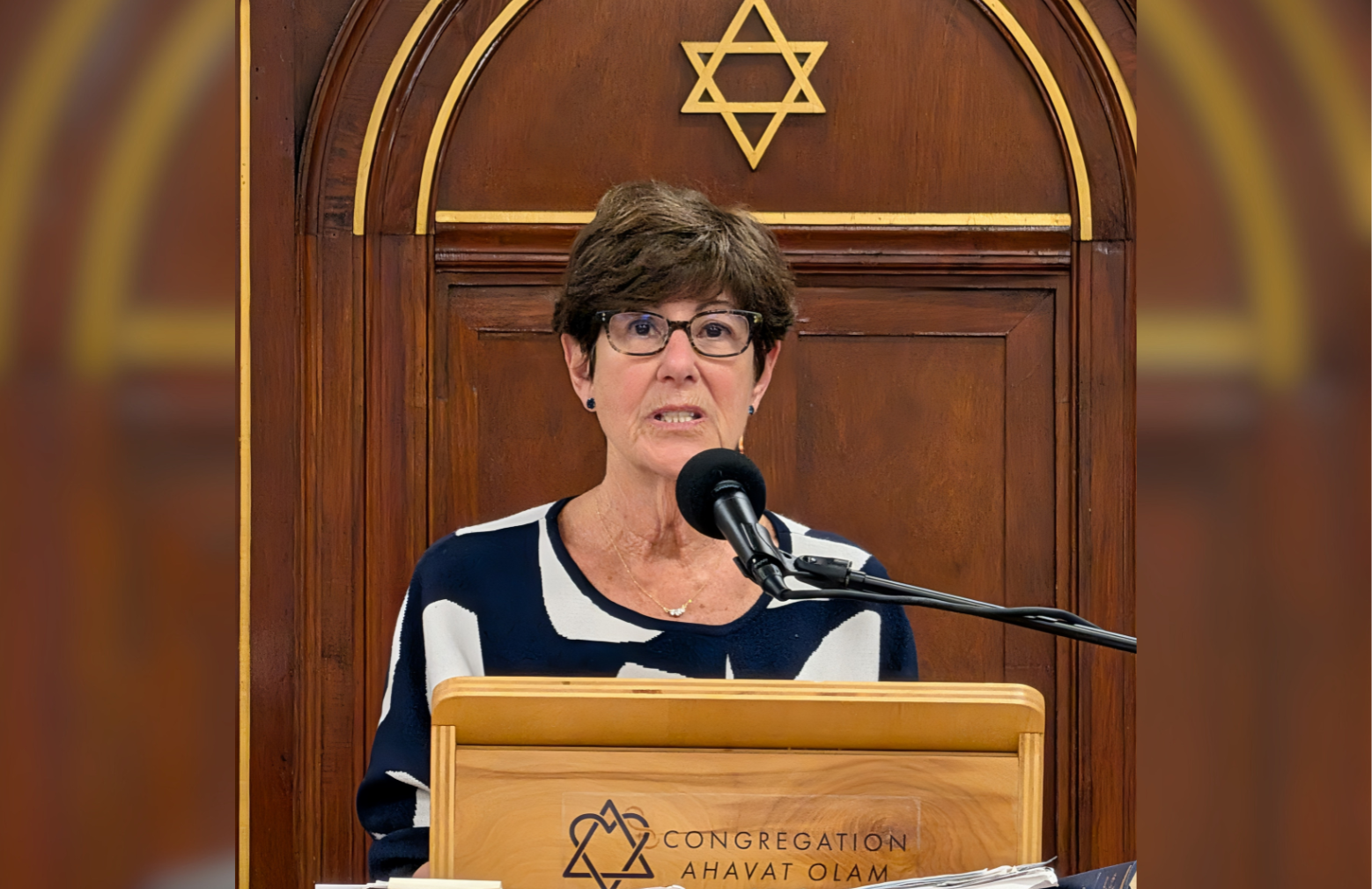
With the 88th anniversary of Kristallnacht approaching, Rabbi Idan Irelander set aside his planned sermon and invited congregant Judy Sciabarrasi to share her mother’s experience during the Nazi violence of November 9–10, 1938.
Judy was moved to speak by news of a November 8 protest targeting Jewish- and Israeli-owned restaurants in Philadelphia, just one day before the anniversary of Kristallnacht.
A Mother’s Memories
Judy’s mother grew up in Cologne, Germany, where her family owned a successful shoe business. As Nazi persecution intensified, the familiar freedoms of childhood began to disappear. She could no longer attend school, ride her bicycle, or go to the movies. Eventually, her father sent her to live with relatives in Augsburg, where she could learn to sew.
It was there, during Kristallnacht, that she awoke to a commotion in the streets. Venturing outside, she witnessed a synagogue burning and Torah scrolls being thrown into the flames. Frightened and desperate to return to her parents, she headed toward the train station, only to be stopped by a policeman who ordered her back.
Meanwhile, in Cologne, her father received a warning that he was in danger. Someone had called to urge him into hiding, helping him escape the Nazis who later came looking for him. For several days, his family did not know whether he was safe.
The family eventually escaped Germany in 1939, although not all their loved ones could leave with them. For Judy’s mother, Kristallnacht was not a distant historical event, but an experience she carried throughout her life and later shared with her daughter.
On Friday evening, those memories became part of our congregation’s collective remembrance.
From Memory to Responsibility
Following Judy’s testimony, Rabbi Idan reminded us that hatred and discrimination must never be met with silence. When we encounter hatred, we have a responsibility to raise our voices.
Two days later, that responsibility found a visible expression in Philadelphia.
On Sunday, November 8, a planned boycott targeting Jewish- and Israeli-owned restaurants was met with a remarkable show of solidarity. Supporters gathered outside the restaurants, forming long lines and demonstrating that those being singled out would not stand alone.
The circumstances of Philadelphia in 2026 are profoundly different from Nazi Germany in 1938. Yet the response offered a reminder that individuals and communities have choices in how they confront prejudice.
Sometimes, those choices are as visible as standing in line alongside a neighbor.
Carrying the Light Forward
Kristallnacht reminds us of the devastating consequences of organized hatred. Judy’s mother’s story reminds us that behind every historical account are individuals and families whose lives were forever changed.
But remembrance is more than looking backward.
It is listening when someone shares a painful history, recognizing prejudice when it appears, and refusing to leave others standing alone.
As Rabbi Idan reminded us on Friday evening, light must overcome darkness. The responsibility to carry that light forward belongs to each generation.
We remember not only because of what happened, but because of what remembering asks us to do today.
Inspired by the November 6, 2026, Shabbat service at Congregation Ahavat Olam, featuring the testimony of congregant Judy Sciabarrasi and reflections by Rabbi/Cantor Idan Irelander.
Watch the November 6 Shabbat testimony and reflection below.